Ariadne is coming to the App Store for iPhone Pro at £99.99: one purchase, no subscription, no account. A light meter, a director's viewfinder, false colour on film, camera look files and AR blocking, built by a working cinematographer.
Press and enquiries: studio, at this domain
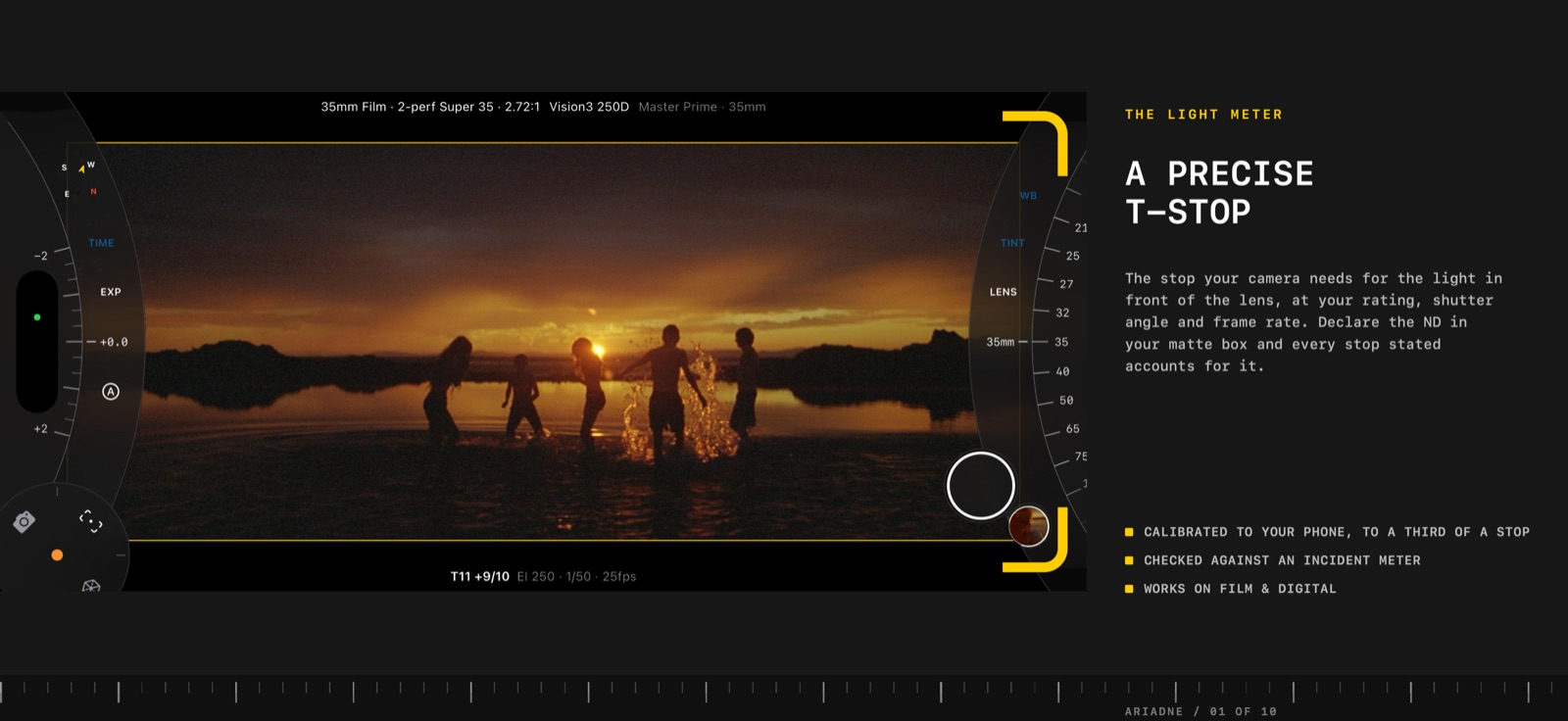
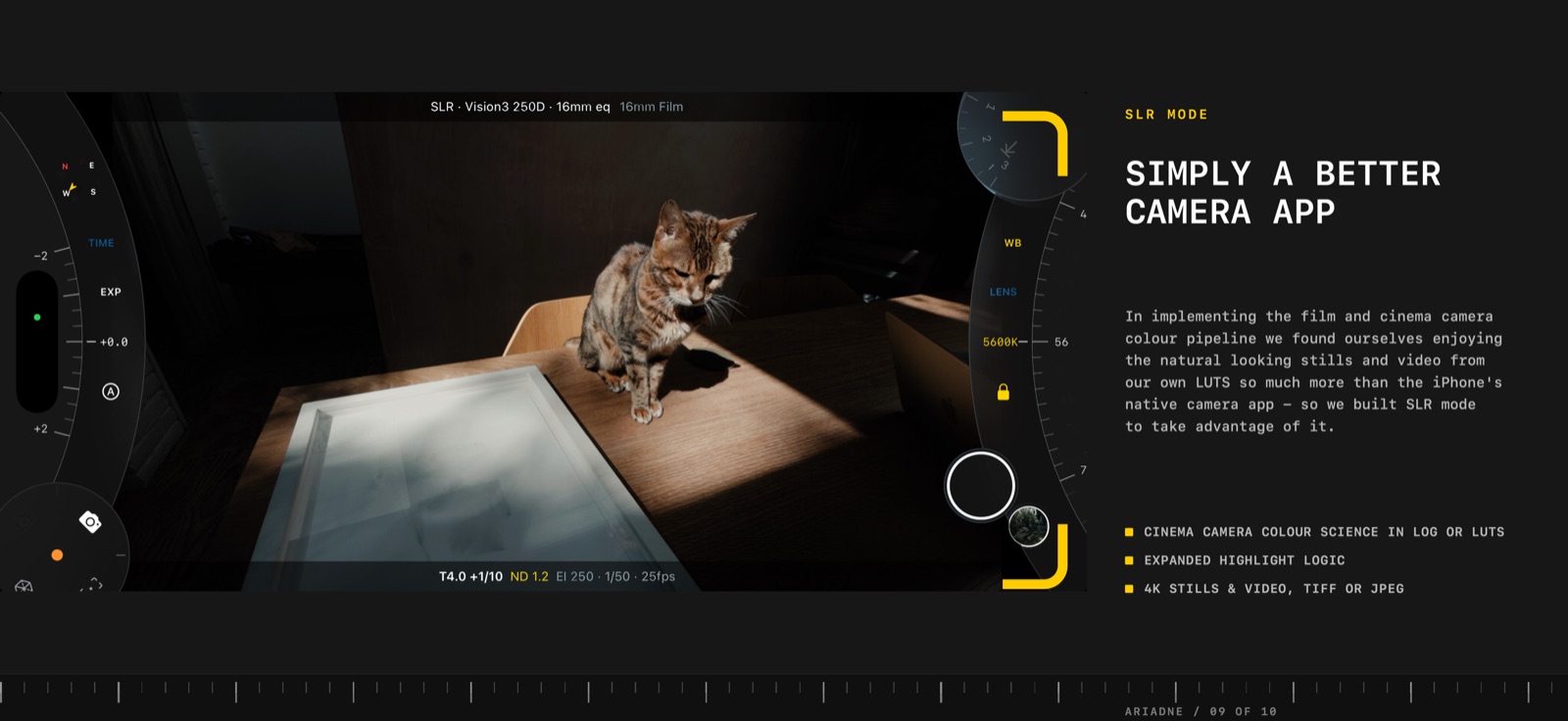
Ariadne states the T-stop your camera needs for the light in front of the lens, at your rating, shutter angle and frame rate, and holds it to about a third of a stop against an incident meter. Declare the ND in your matte box and every stop accounts for it.
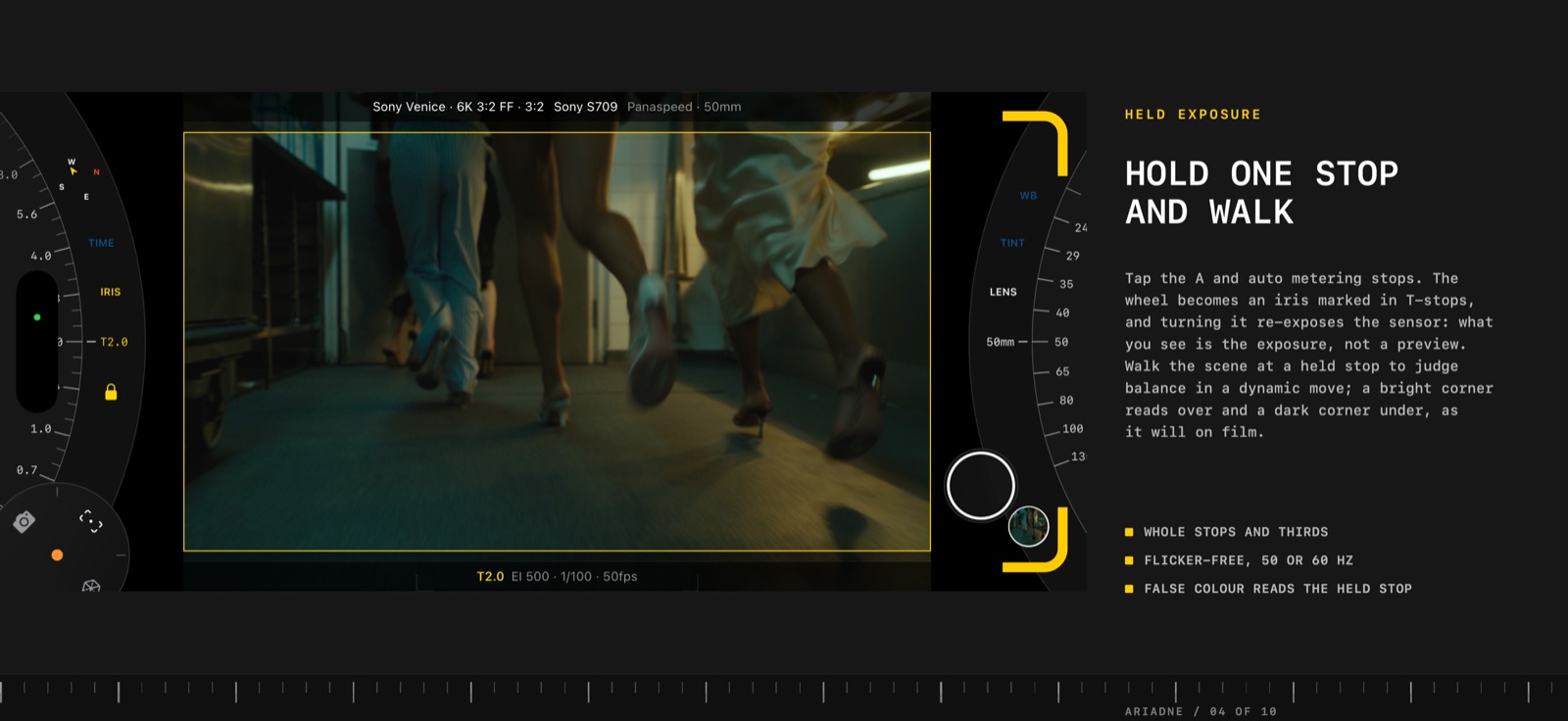
Hold the exposure and the wheel becomes an iris ring in T-stops that re-exposes the sensor, so a location can be walked at one stop the way it is walked on film: a bright room reads over, a dark corner under.
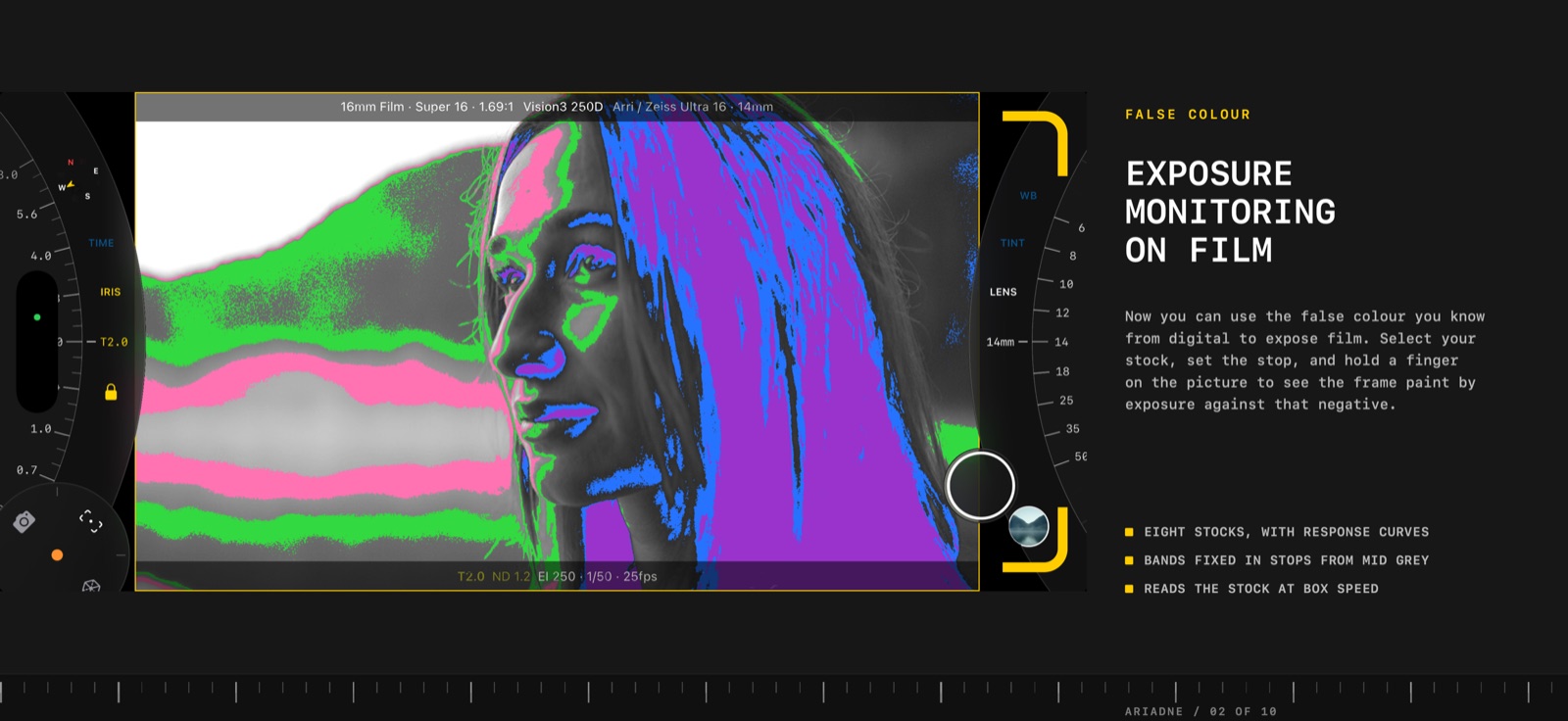
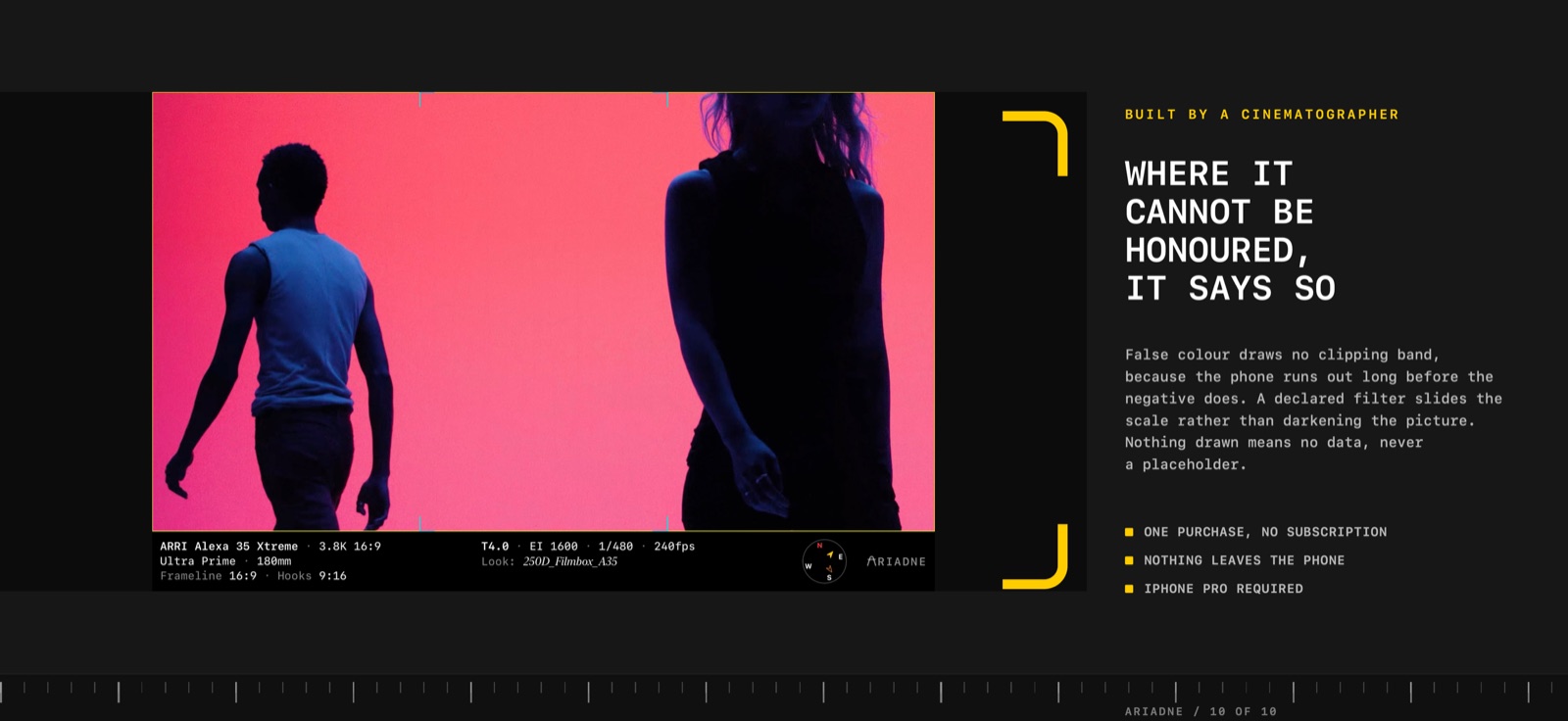
Touch and hold the picture and the frame paints by exposure, in stops from mid grey. On a film body it reads the selected stock at box speed: exposure monitoring a film camera has no path for.
There is no over-exposure band. The phone's sensor clips long before the negative does, and a red band would report the phone's limit as the shot's.
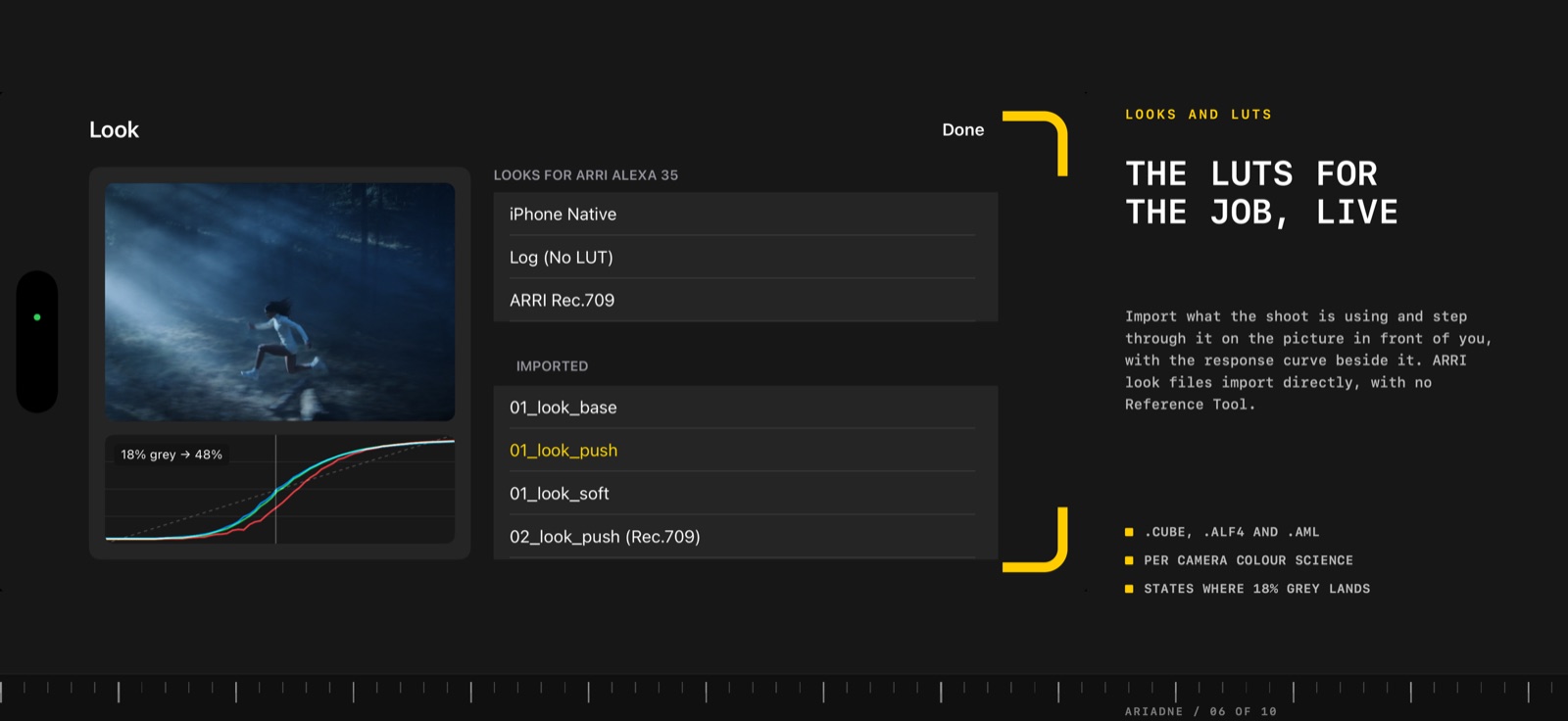
Import .cube, and camera look files in .alf4 and .aml, with no round trip through the maker's reference tool. Each look renders in the colour science it was authored for. The sheet shows the graded picture, the response curve, and where 18% grey lands.
Eight film stocks are built from the manufacturers' published data. Negatives are shown as lab-corrected prints, reversals uncorrected, keeping the cast of the light.
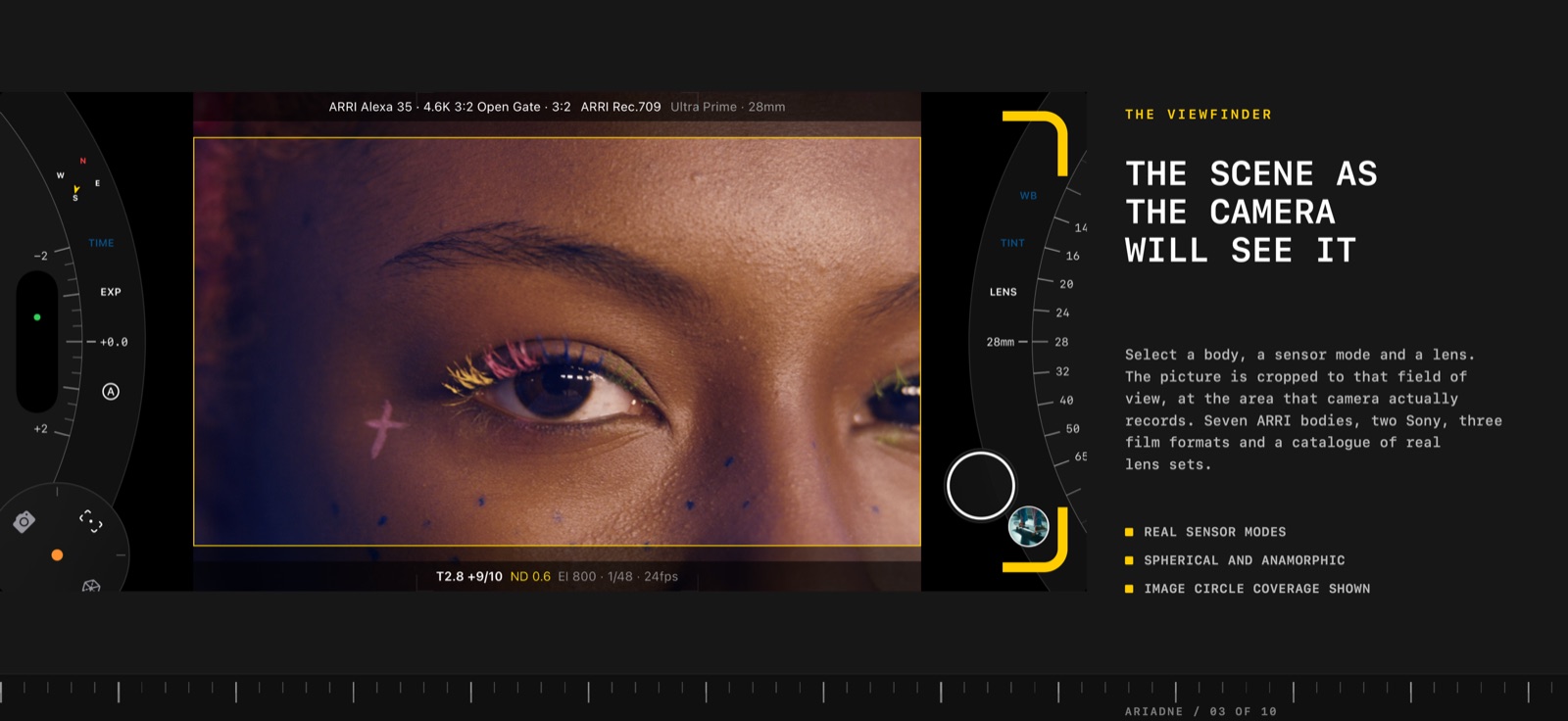
Nine digital bodies and three film formats, at their real sensor modes. A searchable catalogue of real lens sets, primes and zooms, spherical and anamorphic, with 1.4x and 2x adapters. Where a lens set carries image circle data, Ariadne works out whether it covers your sensor. Where there is no published figure, nothing is drawn.
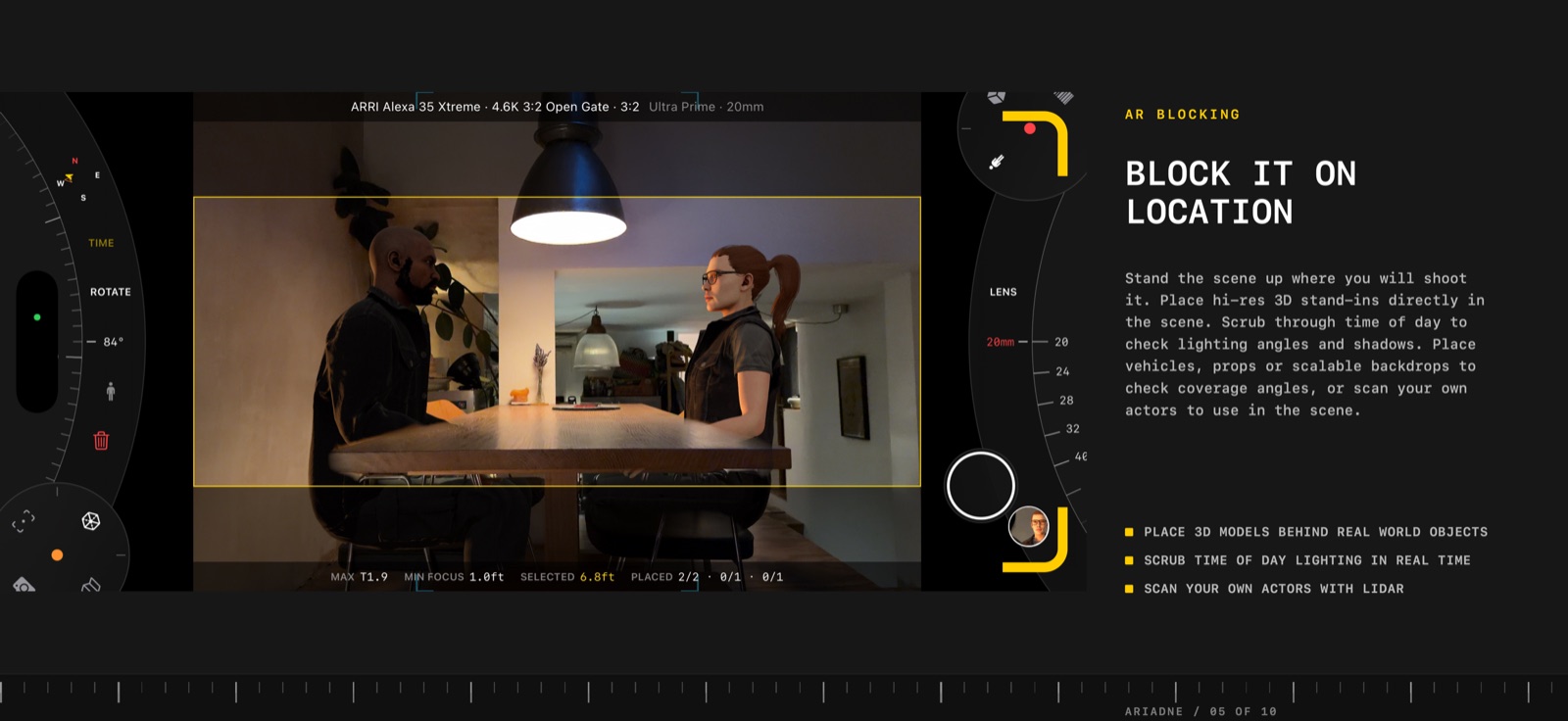
Stand the scene up on the location. High-resolution, lighting-grade stand-ins, height-adjustable, placed on the real floor, seen through the lens you selected and occluded by the real foreground. Backings dressed with your own photograph, vehicles, interior cutaways, tables and seating. Scan your own actor with LiDAR and place the double.
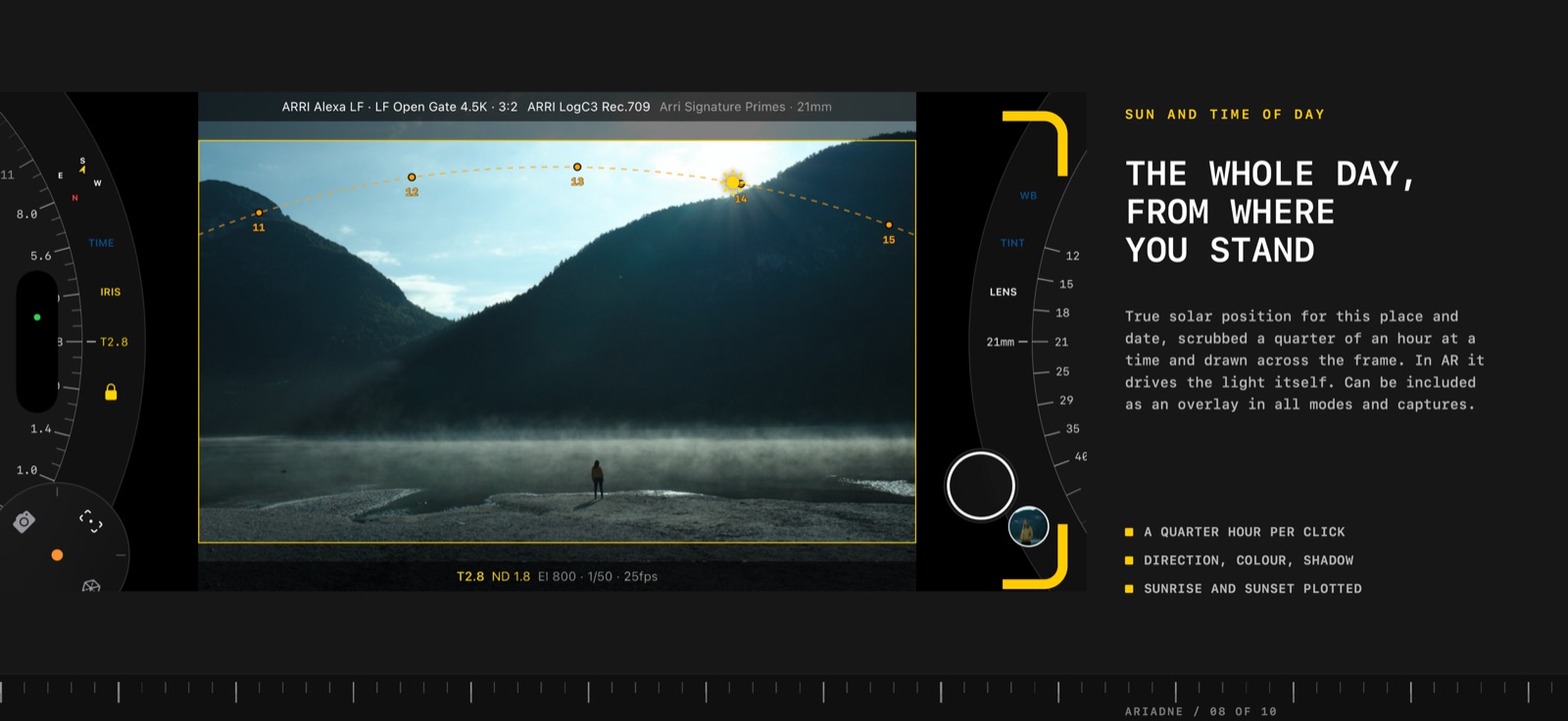
True solar position for where you stand, scrubbed a quarter of an hour at a time, drives the light: direction, colour temperature and the shadows stand-ins cast on each other.
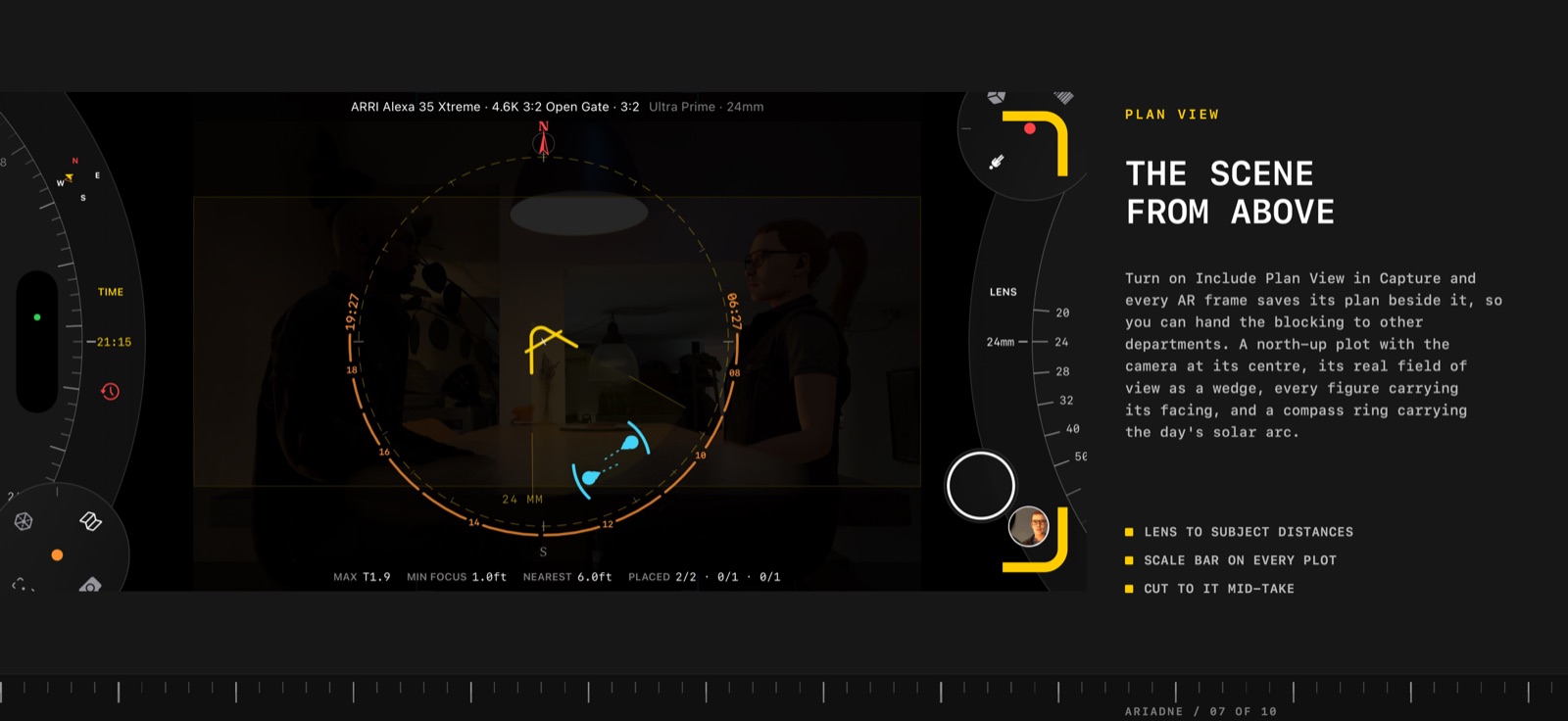
A top-down, north-up plot: the camera at its centre, its real field of view as a wedge, every figure with its facing, and a compass ring with the day's solar arc. Saved beside a photograph it adds a scale bar and lens to subject distances, to hand the blocking to other departments.
One shutter. Tap for a still, hold to record, hold two seconds to latch the take. Framelines, hooks, compass and exposure are burnt into the frame; a JSON sidecar carries the rest. Nothing you shoot leaves the phone.
An iPhone Pro, for the LiDAR sensor and the three rear cameras. The light meter, false colour, the Looks and the film stocks run on Apple Log and need an iPhone 15 Pro or later. The download is 3.3 GB. Landscape only, on purpose.
The release, the ten App Store plates at full size and the icon are on the press page. Review codes on request.
Ariadne is built by Jake Scott Studio, the UX studio from cinematographer Jake Scott.
Cinematography tools for iPhone Pro
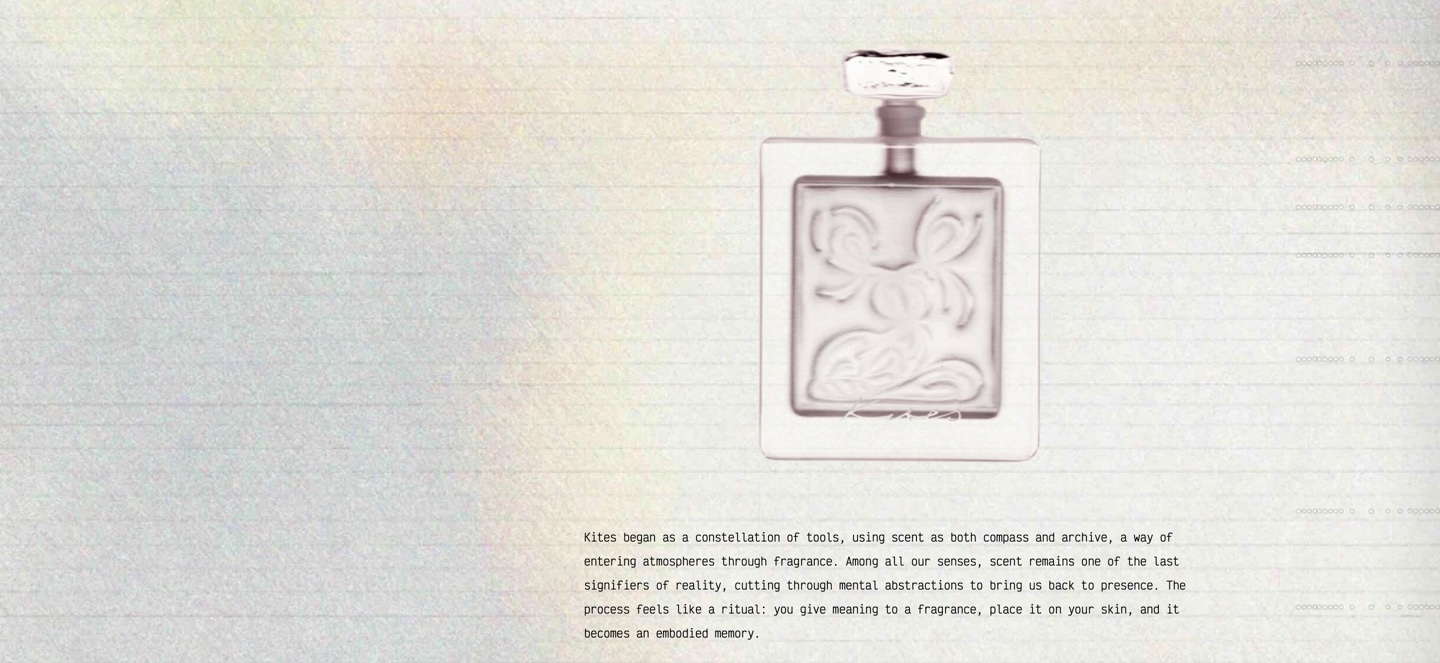
Scent and cast glass, artist and director Emilija Povilanskaite
Selected cinematography at jakescottdop.com.